Climbing a Caribbean Mountain Without Breakfast (Part 1)
The Lesser Antilles, comprising the Leeward and the Windward Islands, are a chain of volcanic islands, 19 of which are defined as still active, on the eastern edge of the West Indies, marking the boundary between the Caribbean and the Atlantic. Antigua has been extinct for tens of millions of years while Montserrat, the next island in the chain, experienced a big eruption in 1995 which destroyed its capital and led to mass evacuation. I was going to visit some of the islands in the middle of the chain, joining the Jubilee Sailing Trust’s three-masted ship Tenacious in Saint Lucia and sailing northwards to Antigua.
I had decided that I was going to spend a few days on Saint Lucia before I joined the ship, so I headed down to Soufriere on the south-west corner of the island. I had flown to Saint Lucia via Antigua, this second leg being on the local carrier, LIAT. My sister had warned me that locally this was generally taken to stand for “luggage inanother terminal”. I should have listened! At least I always carry one change of clothes in my day-sac, together with my sun hat and camera. However, the first thing I did the morning after checking in to the hotel was to buy a spare shirt and underwear, together with the essential bottle of high factor sun-tan lotion: I didn’t know when, or even if, my luggage would join me.
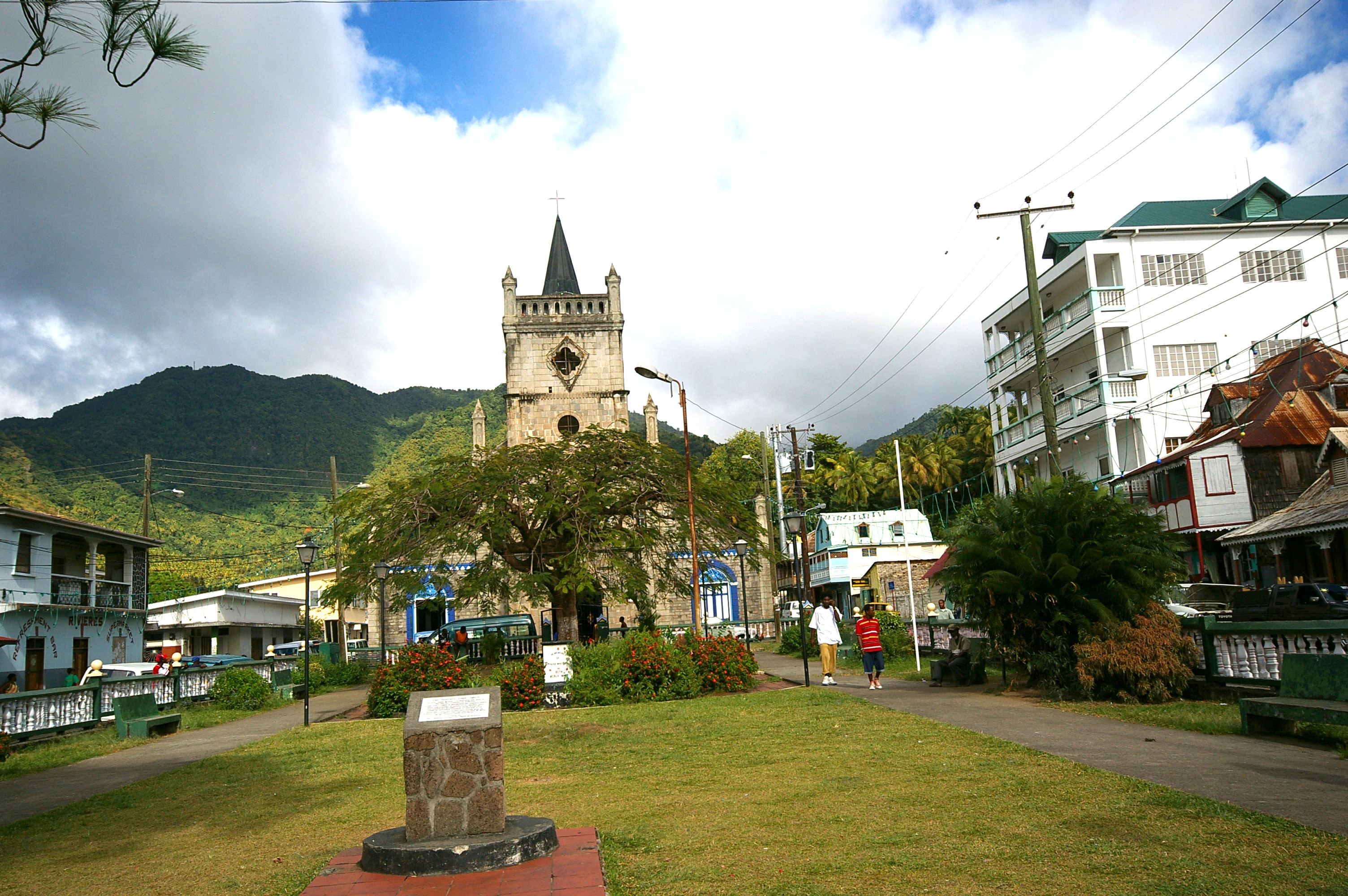
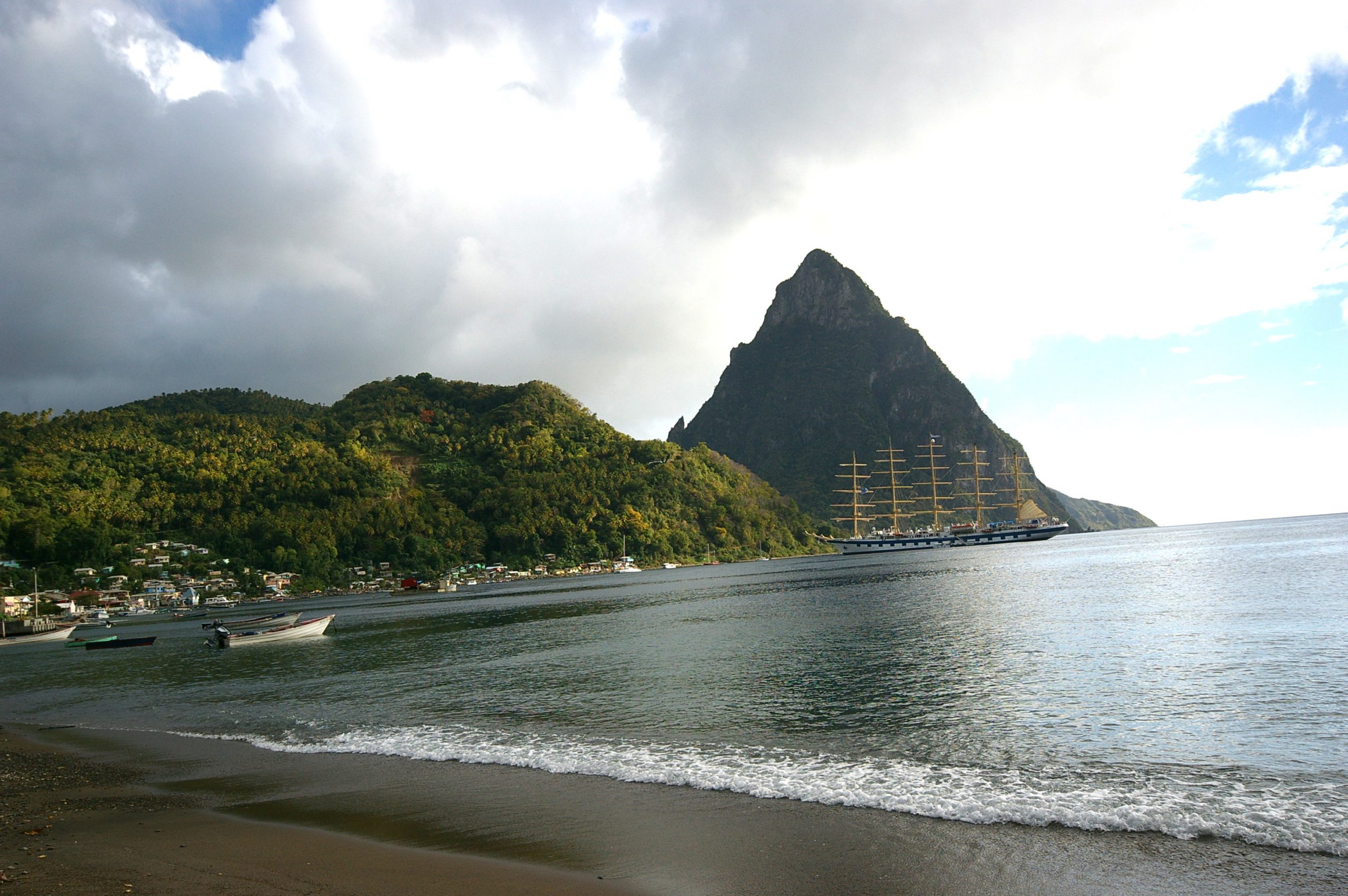
That day, I just wandered round the town and the local area, taking it easy after the long flight from the UK. Soufriere is a small, typical Caribbean town which sits on the long eastern edge of a wide bay, with hills behind it. It looked like its tallest building was probably the old church, sitting in the middle of the town near its main square. Most of the rest of the town consists of one or two storey, often white-painted buildings. It has a small harbour with a selection of mainly local looking boats. The only vessel of significant size that I saw was a large four-masted boat, possibly a sail training ship, that anchored off-shore, in the perfect position to get in the way of some of my photos. It also has a pretty little beach that runs along to the north of the town.
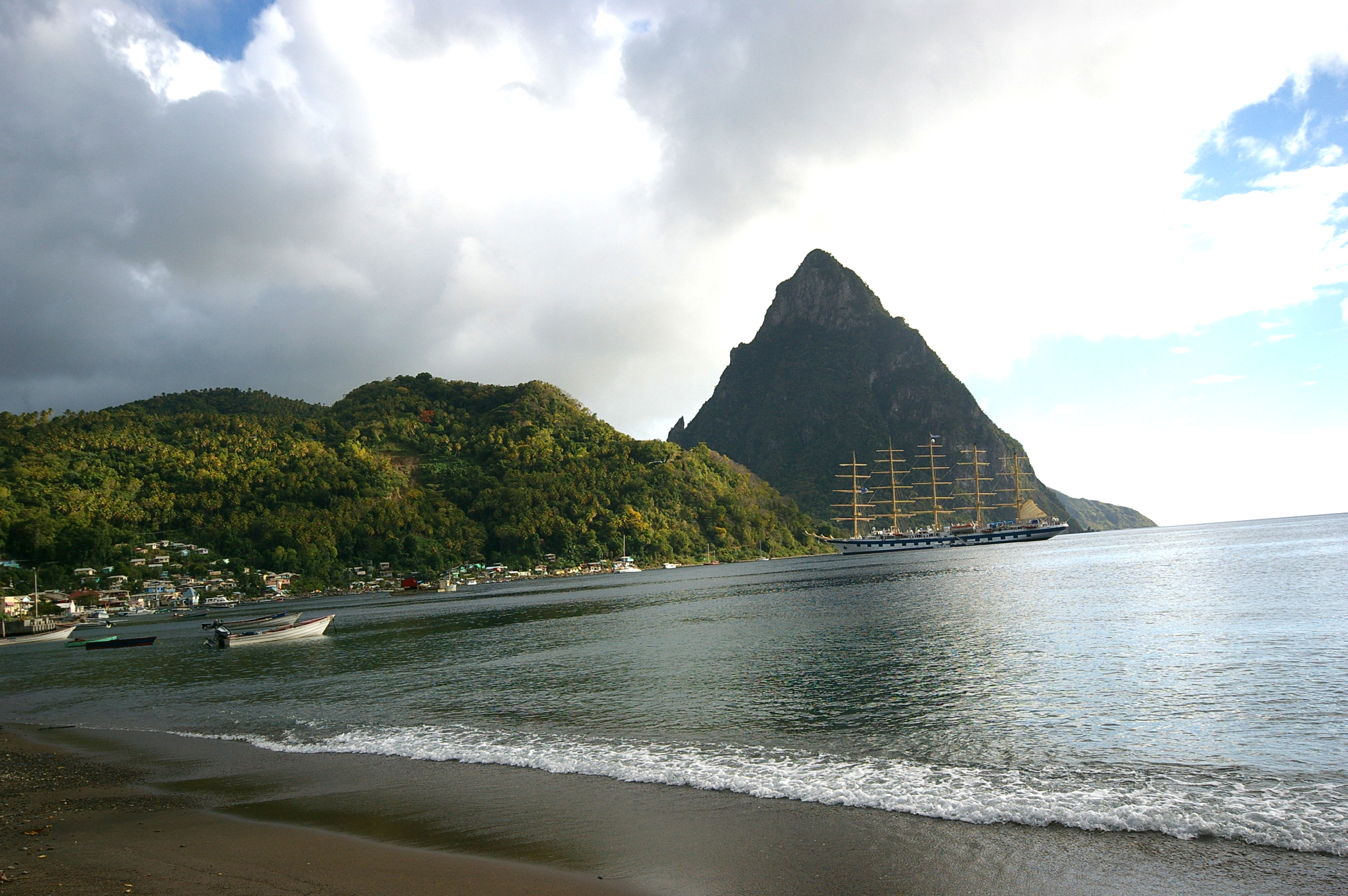
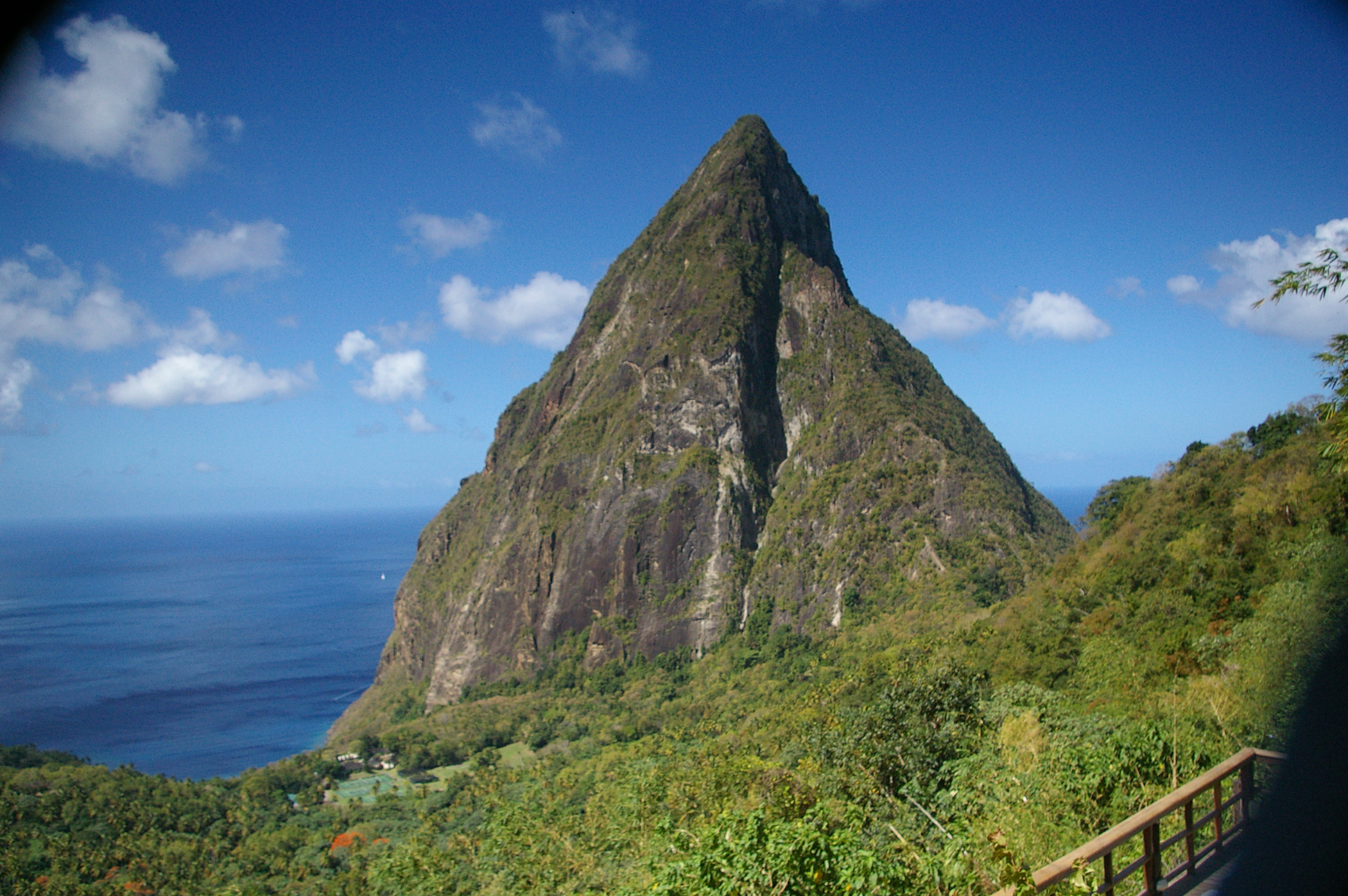
The hills, now rising more steeply from the sea, continue round to form the north and south coasts of the bay. The south-west of Saint Lucia is volcanic with the dormant Mount Gimie inland from Soufriere. But the town is best known for its proximity to the Pitons, two ancient volcanic plugs that sit on the coast south of Soufriere Bay. The hills on the southern side of the bay end suddenly and are followed by the steep-sided and barren looking cone of Petit Piton.
I walked along the path that runs from the town out to the mountain. It is impressive in the sunshine, deep shadows contrasted against the light-coloured rocks, its towering sharp-sided bulk standing out against the blue sky and deeper blue sea. It apparently is climbable, but not without resorting to using several roped sections.
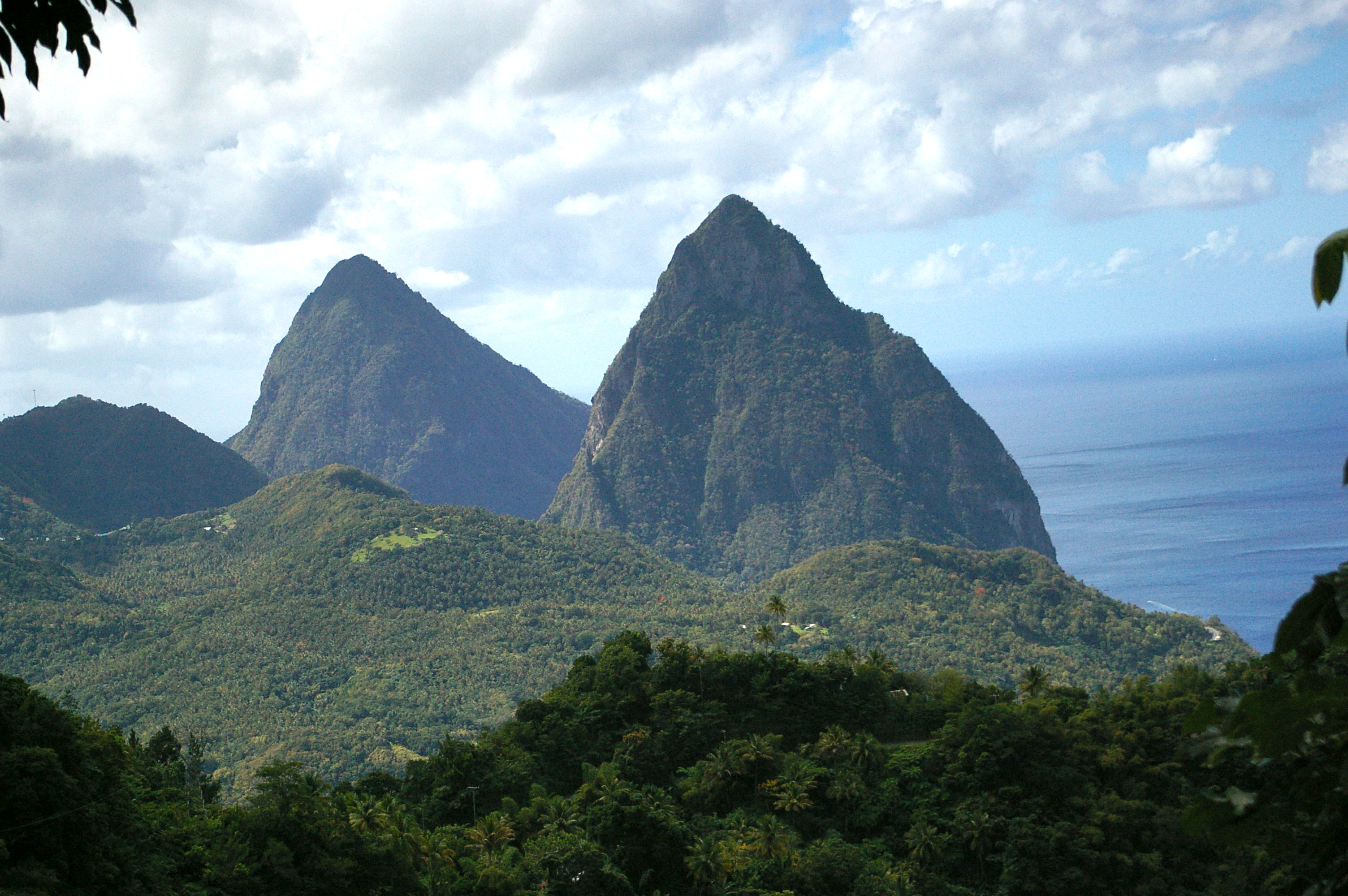
Petit Piton’s bigger brother, Gros Piton, lies further to the south and is not visible from the town. However, by walking along the northern hills you can see it through the break between the southern hills and Petit Piton. Although it is taller, Gros Piton has broader, more gentle slopes that are forested and have a nature trail running up them. This was my target for tomorrow.
My walk up Gros Piton will be covered in Part 2.

Steve, your site is amazing – what a wonderful holiday – an impressive account